
Sensory-Aware in a World That Doesn’t Slow Down
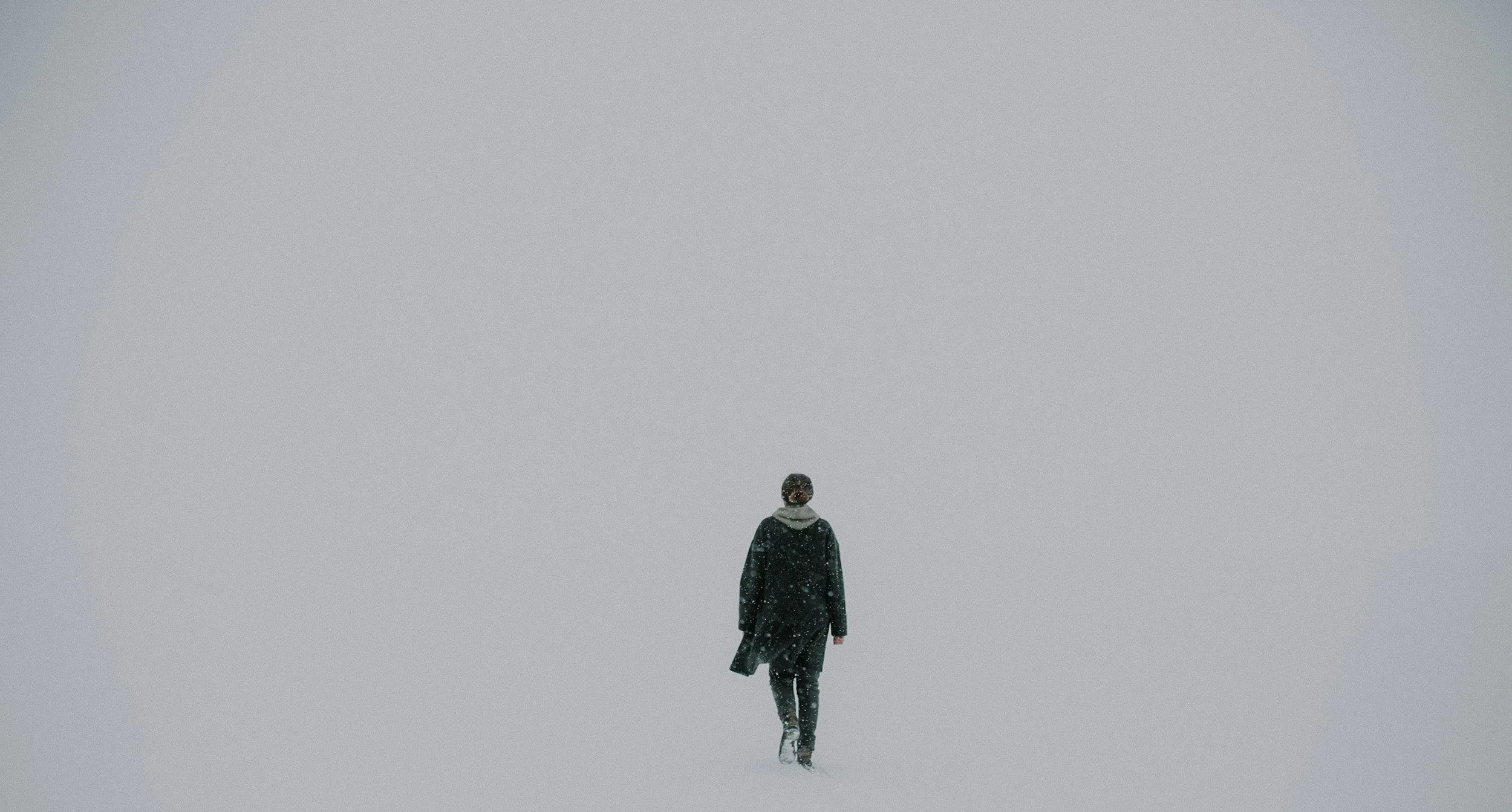
A woman walking in the snow representing sensory awareness in a fast paced world.
It’s been a while since I’ve posted on my blog, and part of the reason is pretty simple. The conundrum of being me is that I know I’m good at my job, but to be good at my job, I give my full energy to it. And when I’m doing that well, there isn’t always a lot left over for other things beyond survival of myself and my family.
To maintain the level of presence and attunement my work now requires, I can’t always keep up with the business-side tasks the way I think I “should.” Writing, posting, explaining myself to the internet, it all takes a different kind of energy. Sometimes I have to choose between doing the work well and talking about the work well. So, while my business has grown, my online presence has become much quieter.
That said, I do know I’m pretty good at what I do. I have strong empathetic abilities, and the specific clientele I work with often benefits most when we regulate or co-regulate at the root level and affirm each other there. When that happens, a lot of the other original concerns and worries start to shrink. They don’t disappear, but they stop feeling so urgent.
That’s always been the main gift I’ve brought to the world of speech therapy.
As an SLP, I’ve always been more of a personality type B than a type A, which has put me in an interesting position in this field. I love language. I love interaction. I love social interaction: analyzing it, thinking about it, imitating it. And a lot of that came from a need to personally understand how to fit in socially.
What I’m Noticing in My Work Lately
Since stepping outside the bounds of traditional, direct speech therapy, I’ve found myself in a really unique position. My clientele has shifted in a very specific way. Almost everyone who finds their way to me, diagnosed or not, has something in common.
You wouldn’t be coming to me if social interaction didn’t cost you something.
Whether I’m doing voice work, working with someone diagnosed with autism, social anxiety, ADHD, giftedness, or something else entirely, the root is often the same. People come to me because navigating social language takes effort. Because it’s draining.
Because it requires awareness, monitoring, and energy that not everyone has to spend.
So my caseload is becoming this interesting cluster of people, artists, highly empathetic people, very intellectually curious people. People you wouldn’t necessarily expect to feel like misfits. And yet, many of us do. It often feels like we’re trying to live in a modern world that wasn’t designed with our nervous systems in mind. You don’t end up working with me by accident. There’s usually a desire to understand yourself, to seek help, to make sense of why certain things feel harder than they “should.”
Lately, I’ve been noticing something interesting, both with my clients and within the larger group of late-diagnosed individuals. I do think we’ve come a long way by using the word neurodivergent instead of defaulting to autism alone, because there really are commonalities across many neurodivergent people. But there are also differences that feel important, and I don’t think we’re always naming them clearly.
I’ve been toying with the phrase sensory-aware as a descriptor, because it seems to fit better for a lot of people, especially women who are late-diagnosed and described as “high-masking.” Many of these women meet the current diagnostic criteria for autism very well. Honestly, if I filled out those forms right now, I would probably meet the criteria, too.
At the same time, the people I’ve worked with who were diagnosed early, often women, though not always, have overlapping profiles that are also very different. I’ve worked with many of them across ages, so this isn’t just theoretical for me. Their experience of social interaction doesn’t look the same.
My early-diagnosed autistic women are often not hyper-aware of social situations in the moment. They don’t necessarily feel drained during social interaction, but may feel awkward or confused afterward. Social routines don’t always make intuitive sense to them. In contrast, many people who are late-diagnosed, or who carry diagnoses like social anxiety, ADHD, giftedness, or who I might call our eccentric artists, are extremely aware of social situations. They’re aware of their own body language and other people’s reactions, and they’ve been actively navigating this their entire lives.
That constant monitoring takes energy.
When I think about my own life, I was always a highly social person, even as a young girl. I could hold conversations with adults and with kids. But I was also deeply drained by social interaction, and I had strong sensory sensitivities long before I had language for them.
My family used to take me to Lynn’s Paradise Café in Louisville, which was full of art, bright colors, AstroTurf, all visual and literal noise everywhere. Somewhere, a budding artist should like. I didn’t know what overstimulation was back then. I just knew my eyes didn’t know where to settle, I couldn’t follow conversations, and my stomach hurt. I would find myself eager to go outside to breathe. After a day like that, I knew my brain wouldn’t calm down, and sometimes I’d lie in bed at night with the walls spinning after a full day at the mall or somewhere similar.
So I taught myself, slowly, that if I wanted to be okay, I had to moderate those experiences. It also took a lot of social control to engage with people who had less sensory awareness than I did. The lunchroom was overwhelming. I didn’t spend a single day during my entire high school experience eating in the lunchroom, and I felt a weird shame about it because I wanted to be more social. But it wasn’t about wanting or not wanting; it was that monitoring social interaction on top of sensory input was just too much if I wanted to make it through the rest of the day normally.
One thing I see over and over again with my clients is guilt. This internalized guilt about not being like louder, more socially effortless people, about not being able to push through everything. Somewhere along the way, many of us learned that this meant something was wrong with us.
I recently watched a talk by Jacinta Houting, an autistic research psychologist and activist, who spoke about the social model of disability versus the medical model. One thing she said really stuck with me, using the word disabled as a verb, not a deficit. Being disabled by an environment. I talk about this with my clients all the time.
For example, when I go to the Renaissance Fair, I don’t feel socially drained, even though I’m surrounded by thousands of people laughing and doing unexpected things! That always surprises me. Or I’ll ask, would you struggle in the grocery store if the lights were lower, the noise was reduced, and there were fewer people? Probably not.
There’s also research using a “telephone game” model that shows something fascinating: neurodivergent people communicate accurately with other neurodivergent people, and neurotypical people do the same with each other. But when the two groups are mixed, the message breaks down.
So when I say we’re on different wavelengths, I mean that quite literally.
Part of the work we do together is learning that not everyone is your people. Some people you’ll vibe with, and others you won’t. And that’s okay. Fill your cup with the people who feel regulating, not draining. Stop trying to force yourself into spaces where you don’t fit.
This comes up a lot when we talk about social capacity too. We all have a gas tank. I used to think something was deeply wrong with me because I couldn’t push through every church service, every wedding, every family gathering, every dinner with people I didn’t really connect with. I thought, why can’t I do this like everyone else?
But here’s the deal. I don’t always align with those people in those spaces.
So I don’t know. These are just things I’m thinking about.
What I do know is that I’m very open and very honest with my clients about my own needs, and we’re growing together. And honestly, the most beautiful part of this journey has been the mutual recognition. That moment of, “I see you. You see me.”
There are other people like us.
If nobody talks about this, it’s easy to believe you’re alone. But there are so many thoughtful, interesting, deeply perceptive people out there. Some just have the loudest voices. Others are thinking too carefully to speak quickly.
We need neurological diversity the same way we need biodiversity.
We need everybody. And yes… I’ll admit it. I probably do have a preference. :)
Meghan
Here’s the awesome Ted Talk: