
Using Cooking to Support Communication (AAC, Autism, TBI, Stroke & Special Education)
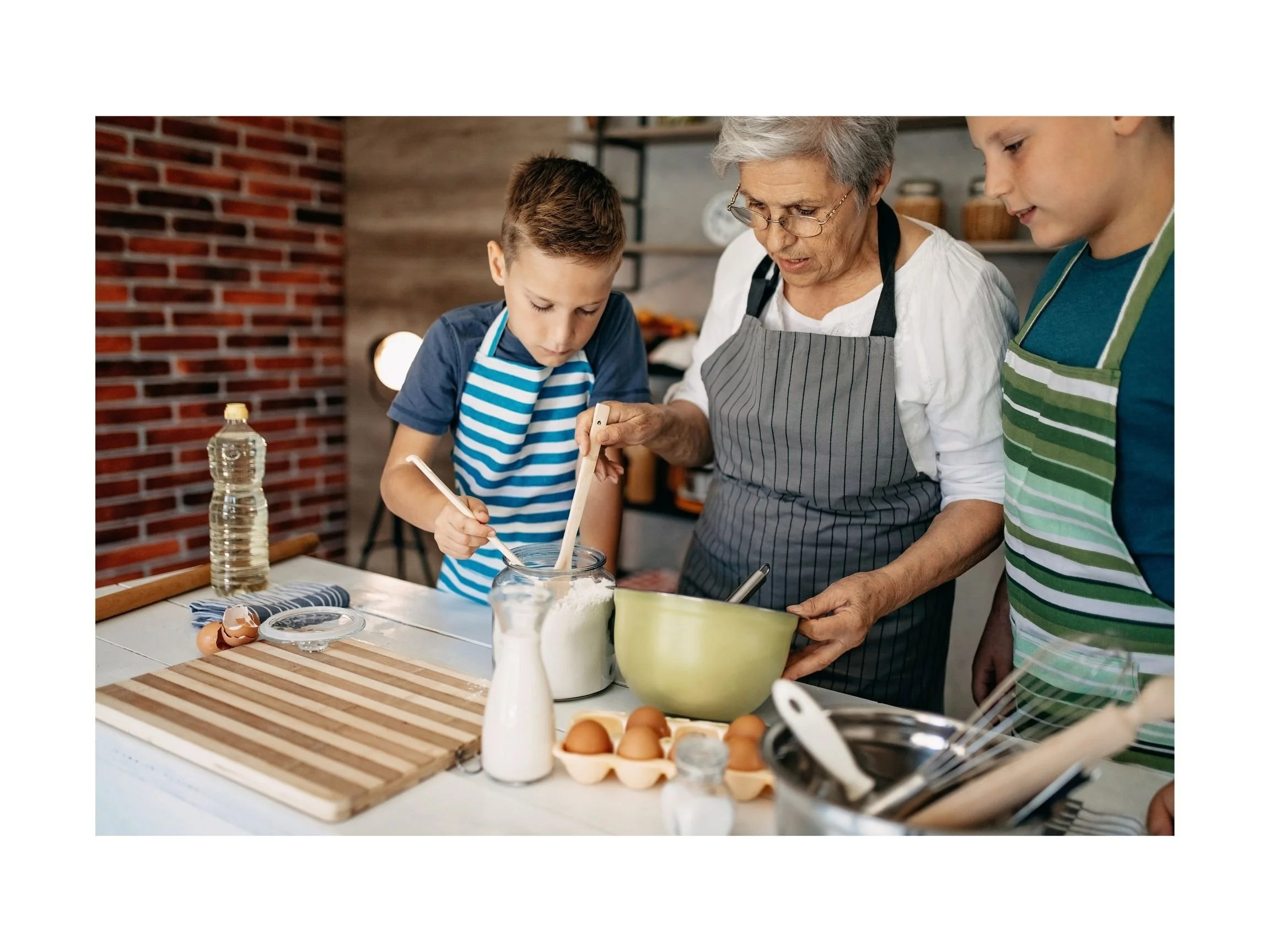
Family cooking together using an adapted visual recipe
For most of us, there’s something deeply human about preparing and sharing a meal. Across time, cultures, and families, cooking together has always been deeper than just making food. It’s connection. It’s participation. It’s belonging.
And in my work as a speech-language pathologist, I’ve seen how powerful that experience can be for communication, especially for individuals who are nonverbal, use AAC, or are navigating changes related to autism, stroke, brain injury, or cognitive delays.
Why Cooking Works So Well for Communication
What I love about cooking is that it naturally brings functional communication into a shared moment without forcing it. You don’t have to manufacture opportunities; they’re already there.
To make this work in a group, someone has to:
choose ingredients
follow steps
ask for things
respond
participate
comment
critique
hold an opinion
And suddenly you’re working on language, sequencing, problem-solving, and social interaction, all at once, and all in a way that actually makes sense for real life. For individuals in speech therapy, special education classrooms, and/or rehabilitation settings after TBI or stroke, this kind of real-life, functional context matters. It feels different than sitting at a table working on isolated tasks. Cooking feels like life and happens in the home.
A Personal Experience That Shifted This for Me
I noticed this most clearly with my own grandmother. After battling cancer, she experienced a brain injury following surgery. Cooking, which had always been a core part of her identity, was no longer accessible in the same way.
And I remember thinking: Not only can she no longer cook, she’s lost her ability to participate.
Preparing and sharing weekly meals had always been part of how we connected as a family. When that changed, something deeper in our communal dynamic changed, too. That experience of loss and exclusion stayed with me, and it continues to radically shape how I approach communication, AAC support, and speech therapy overall.
What I Saw in Schools and Therapy Settings
About a decade ago, when I was co-teaching in a middle school intellectual disabilities classroom, cooking became one of the most meaningful things we did. Not because it was just engaging, but because it brought everything together. Students weren’t just “working on goals.” They were participating. They were contributing. They were part of something that produced a result we could all experience.
We were still targeting communication, language, sequencing, and social interaction, but it didn’t feel forced or disconnected. This was real life.
AAC, Nonverbal Communication, and the Missing Piece
For individuals who are nonverbal or use AAC, cooking can be incredibly powerful, but it’s not always easy to support. For years, I spent so much time creating my own materials, as many SLPs have traditionally had to. I was cutting pictures out of magazines, laminating everything, drawing my own symbols, using Velcro, staying up late, trying to piece together something usable for a single weekly session.
There weren’t many options at the time for symbols. Now we have tools like LessonPixand Canva, which have made creating visuals so much more accessible, but there are still big areas of need in speech therapy materials. Even so, I am so very thankful for the technological advances of symbol systems and graphics that we have available now. But even with those tools, I kept noticing the same issue.
There’s still a huge gap.
The Gap That Still Exists
Most adapted materials tend to fall into two extremes.
They’re either:
very clinical
or very childlike
And neither one really works for many of the people we’re supporting, especially teens and adults, or individuals in rehabilitation after stroke or TBI.
There’s a real need for materials that are:
accessible
visually clear and pleasing
but also respectful and age-appropriate
Because really, communication support shouldn’t come at the cost of dignity.
How Cooking Can Support Communication (In Real Life)
You don’t need anything elaborate to make this work. Sometimes it’s as simple as slowing down and making space for interaction.
You might:
offer choices (“Do you want this or this?”)
point to the ingredients and label them
reference visual steps
ask someone to get an item
pause and wait for a response
These moments add up. And they apply across so many populations, whether someone is using AAC, is nonverbal, has autism, is recovering from a stroke, or is working through cognitive-communication challenges after a brain injury.
Why Visual Recipes Make Such a Difference
Visual supports change everything. They reduce the amount of language someone has to process. They give structure. They create predictability. And most importantly, they allow someone to participate more independently.
Instead of being told what to do, they can follow along, make choices, and engage in the process.
Why I Created This
This is exactly why I created Plated with Ease: Adapted Recipe Collection.
I wanted something that:
supports real communication goals without looking like a speech therapy material
is visually pleasing and inspiring
works for AAC users and nonverbal individuals
can be used in speech therapy, special education, or rehab settings
and still feels respectful, not “babyfied.”
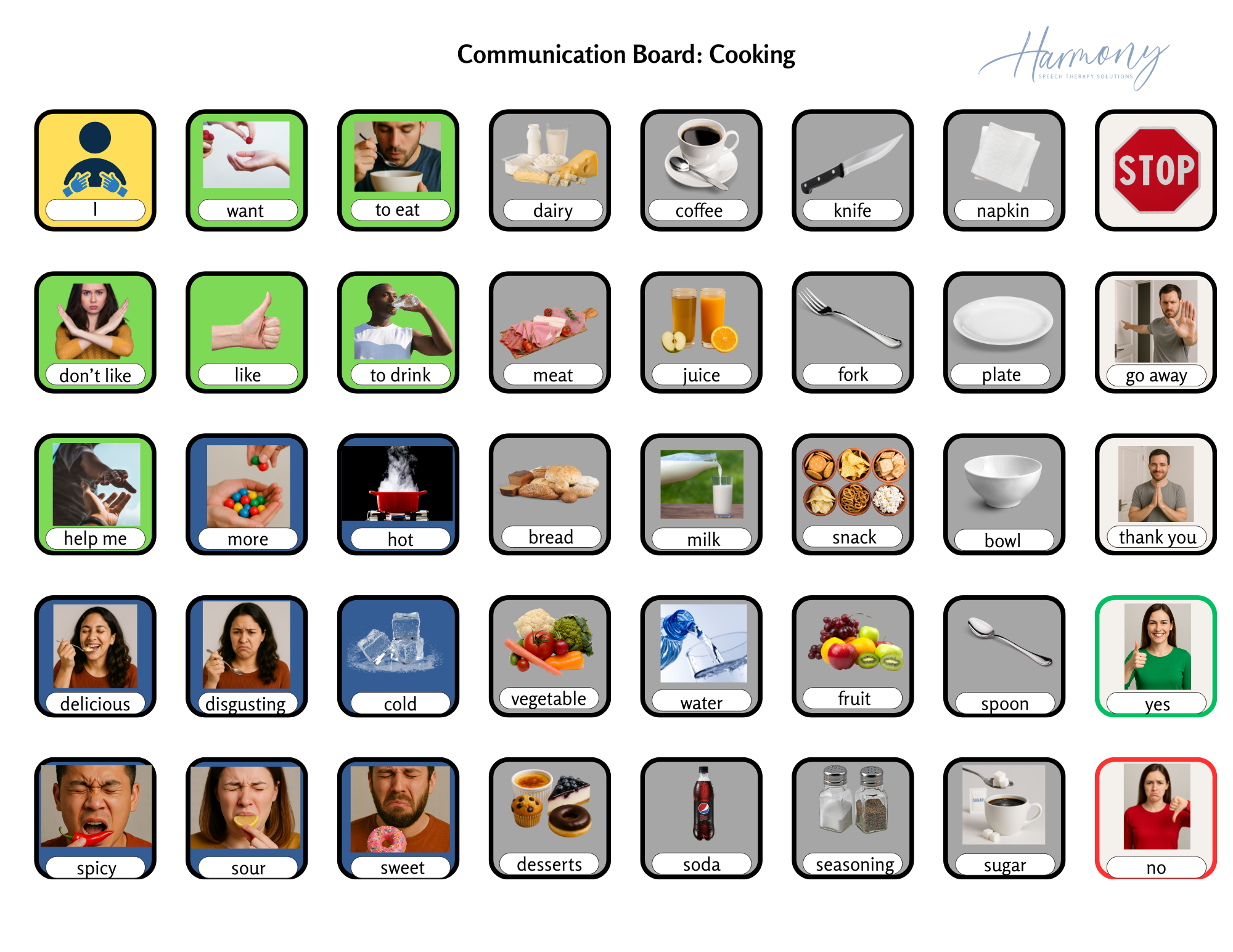
In the cookbook, I created and included a communication board that supports individuals who are nonverbal in a way that feels appropriate across ages. It’s also here on another blog post for free, too. Click here to download for free.
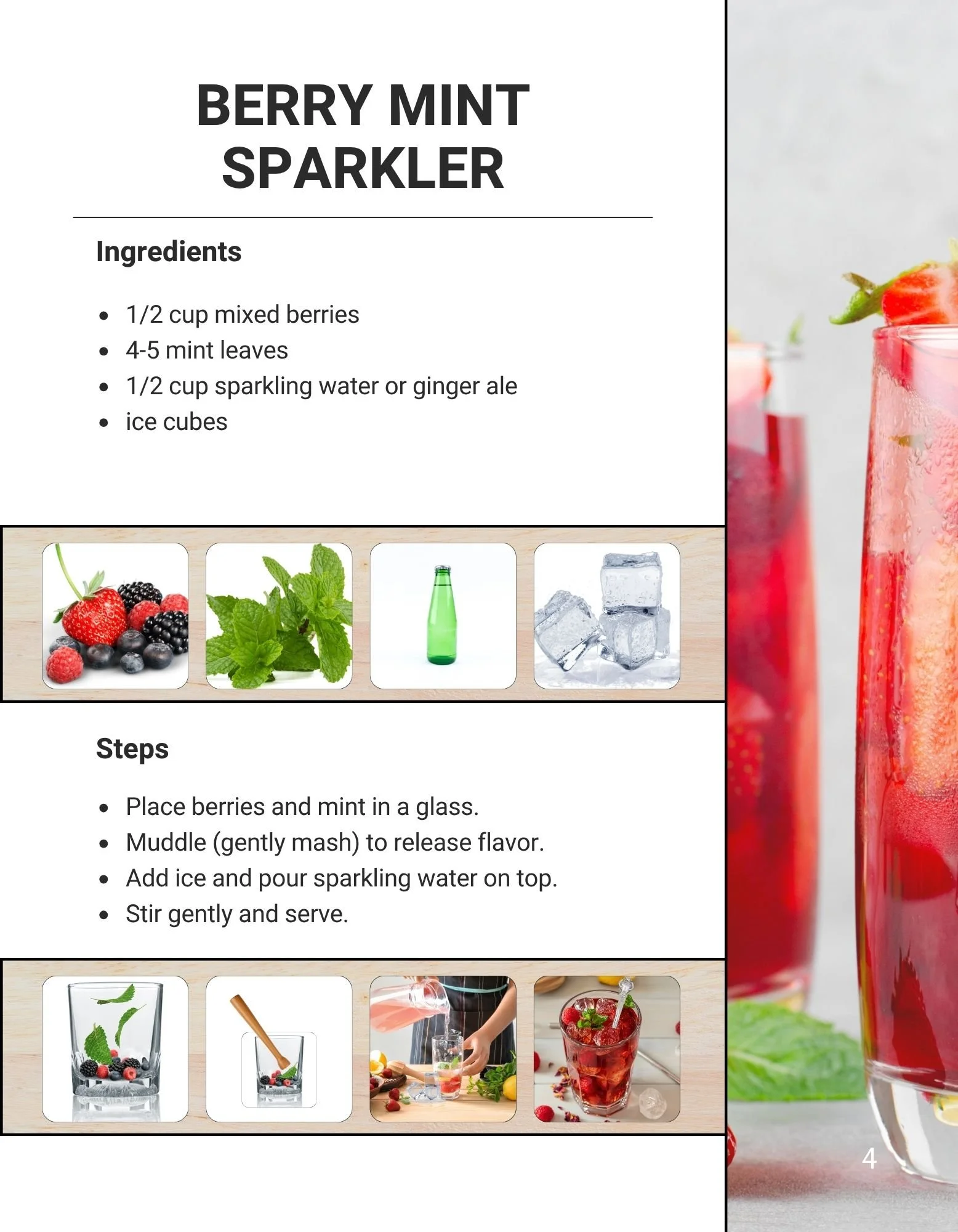
Try A Free Sample of the Full Recipe Book
If you want to see how this material works in practice, you can explore a free sample here: